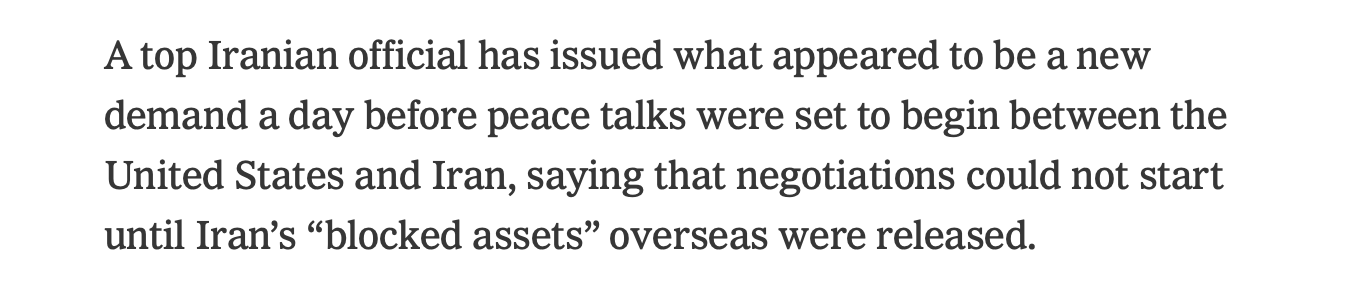
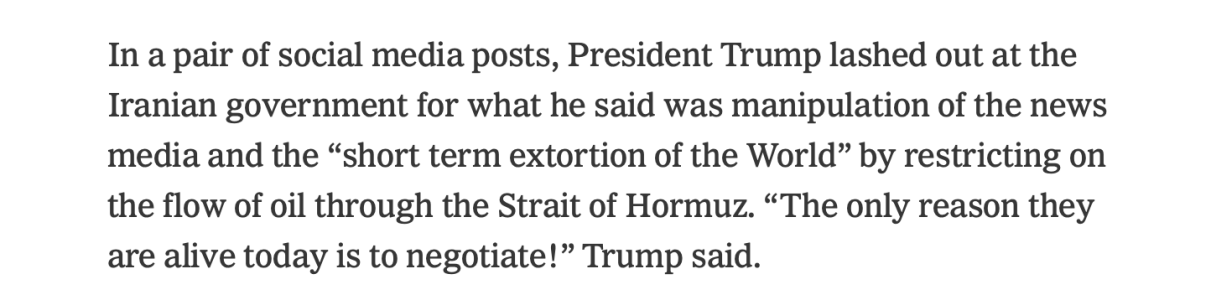
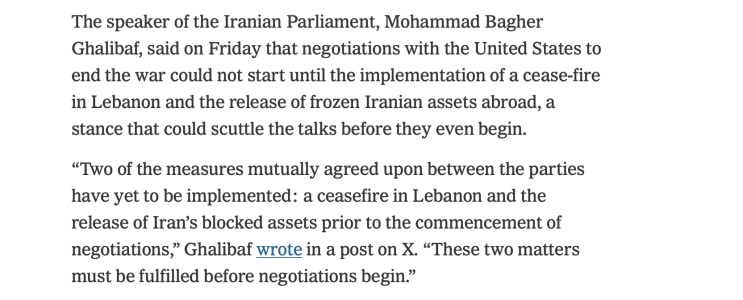
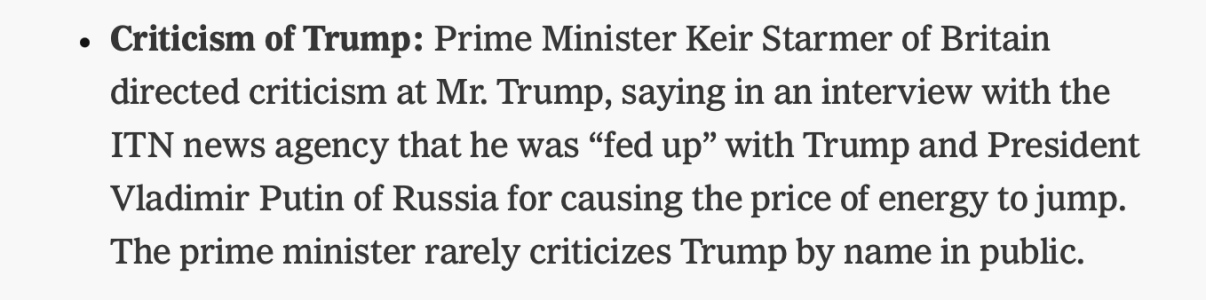
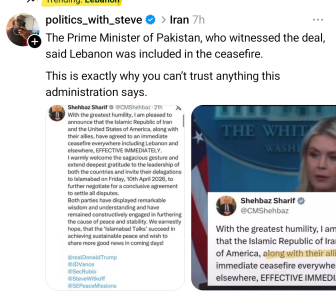
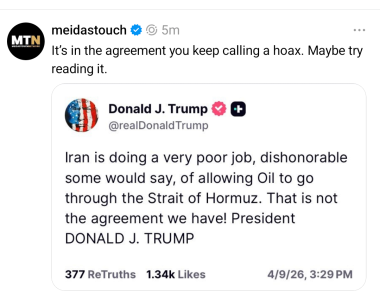
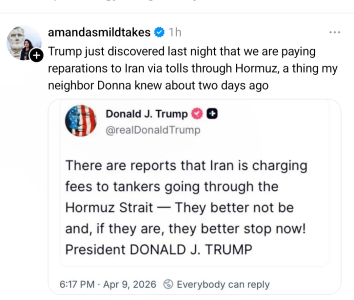
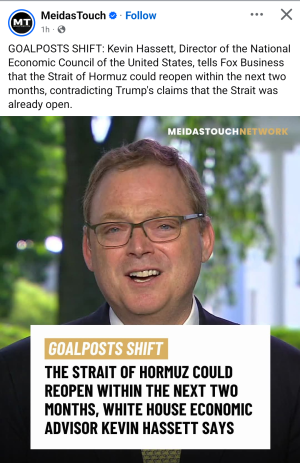
So we really don't have a cease fire agreement? I'm cofused.
US oil prices jump near $100 a barrel again. Trump’s Strait of Hormuz plan has hit a snag.
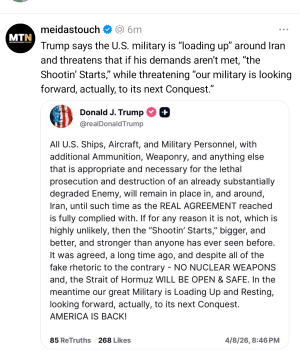
Oil prices rose early Thursday after traffic through the Strait of Hormuz remained limited and President Donald Trump said the U.S. military will remain around Iran until a “real agreement” is reached and fully complied with.
“If for any reason it is not, which is highly unlikely, then the ‘Shootin’ Starts,’ bigger, and better, and stronger than anyone has ever seen before,” he wrote in a social-media post late Wednesday.
Brent crude futures, the international benchmark, rose 4.2% to $98.68 a barrel, while West Texas Intermediate futures—the U.S. standard—were up 5.3% to $99.55. WTI tumbled 16% Wednesday and Brent fell 13%.
The price moves also reflect growing concerns about whether the two-week cease-fire can hold. Israel’s strikes on Lebanon undermine international efforts to bring peace and stability to the Middle East, Pakistan’s government said Thursday, The Wall Street Journal reported.
Activity, or a lack of it, in the Strait of Hormuz is another reason.
Trump reiterated in his post that the U.S. and Iran have agreed the strait will be
open and safe. He also said the U.S. would help with the traffic buildup in a separate post Wednesday. More than 400 vessels remain “effectively stranded” in the region, vessel-tracking company MarineTraffic said Wednesday.
But ship traffic through the strait, which normally accounts for around 20% of the world’s oil supply, has stayed at minimal levels since the cease-fire was announced late Tuesday.
Ten vessels appeared to be in the strait, as of 5.30 a.m. Eastern time early Thursday but four of those were Iranian-flagged, according to MarineTraffic’s live map.
Two ships did make it through early Wednesday—a Greek-owned bulk carrier and a Liberia-flagged vessel, MarineTraffic said. In total four ships were allowed to pass through, according to S&P Global Market Intelligence.
However, the strait was then reclosed to oil tankers as of Wednesday evening local time, The Wall Street Journal reported, citing Iran’s semiofficial Fars News Agency. Iran has also told mediators it will be limiting the number of ships passing through to around a dozen a day and charge tolls, the Journal also reported.
Goldman Sachs analysts said they expected energy flows through the strait to start to recover this weekend, followed by a gradual one-month recovery in exports to prewar levels. The two-week cease-fire was consistent with that base case, they said in a note late Wednesday.
They kept their fourth-quarter Brent crude forecast unchanged at $80 a barrel—and $75 for WTI.
But UBS analysts said important questions still need to be answered, such as “whether ships will be happy to enter the Gulf, especially as we get closer to the end of the 2-week period.”
They added there is also the question of whether Gulf countries would be willing to send tankers through the strait under a process controlled by Iran. “This may be the case in particular with Saudi Arabia and UAE,” they said, noting the two countries had a combined 4 million barrels a day of liquids production shut-in in the Middle East.
UBS also forecast Brent crude to fall to $80 a barrel in the fourth quarter.
But those price targets rely on traffic through the Strait of Hormuz to start picking up—and there’s no guarantee of that right now.
Link via Barron's
https://www.msn.com/en-us/money/mar...1&cvid=69d7ab2021484ade807e4704f35da315&ei=46






 www.facebook.com