

Polds4OSU
Marshall
Gee just right after Trump's family starts their own Crypto Firm too!!
After announcing a two-week ceasefire with Iran on April 7, President Trump floated the idea of a "joint venture" to set up a tolling system in the Strait of Hormuz (1).
Iran, meanwhile, is already creating a tolling system and, in recent weeks, has allowed ships from "friendly" countries to pass — after paying a toll — while blocking ships allied with the U.S. or Israel, The Wall Street Journal reports (2).
Early in the war, Iran seized control of the strategic waterway that transports roughly 25% of the world's seaborne oil (3), threatening to target ships with missile and drone attacks if any attempted to cross the strait without permission, effectively closing the waterway and sending fuel prices soaring.
With oil prices continuing to be a cause for concern, Trump announced on April 12 that the U.S. will start blocking ships from entering or leaving the Strait of Hormuz "immediately," CTV News reports (4). Trump's announcement comes following the recent U.S.-Iran ceasefire talks in Pakistan, which reportedly concluded without an agreement.
Some reports suggest that fees will depend on the size of the ship, but could be as high as $2 million for a supertanker. Lloyd's List Intelligence reports that at least one vessel has paid $2 million for passage through the strait (5).
By accepting payments in cryptocurrency, Iran is able to bypass U.S. sanctions, avoid using the greenback-based financial system, and ensure payments can't be seized or frozen. Meanwhile, Iranian control of the strait could shift the balance of power in the Middle East, giving Iran leverage over other nations while bringing in substantial revenue.
Iran's 10-point peace plan, published by Iranian state media, does not include such a joint venture. Rather, it calls for U.S. military withdrawal from the Middle East, the lifting of sanctions on Iran, and for Iran to maintain control of the Strait of Hormuz (7).
Trump has also suggested the U.S. could impose its own tolls on vessels passing through the Strait of Hormuz, The Hill reports (1).
According to the United Nations Convention on the Law of the Sea, countries aren't allowed to charge tolls for the safe passage of vessels through natural waterways (8). Egypt and Panama charge tolls, but those tolls are for canals — not international straits.
A solo or joint tolling system also assumes that other nations would be on board with such a plan. As Rachel Ziemba — founder of advisory firm Ziemba Insights — told Malaysia's The Star, China, which gets 40% to 50% of its oil via the strait, would be unlikely to support such a proposal (9).
Furthermore, any toll on the strait could also "introduce a permanent layer of political risk for both Gulf producers and their customers by giving Tehran disproportionate influence over which ships can transit and when," according to EnergyNow (10). For example, Iran could potentially place a ban on Israeli vessels, or "slow Saudi shipments to apply pressure on Riyadh."
"There's no going back to what we had," Mark Zandi, chief economist of Moody's Analytics, told USA Today (11). "At least not this year."
Even if a peace deal is reached — and the agreement were to hold — several analysts agree that gas prices won't go back to pre-war levels any time soon, especially since dozens of refineries and oil fields in the Gulf have sustained damage (12).
"We will have less oil than before," Clayton Seigel, senior fellow with the Energy Security and Climate Change Program at the Center for Strategic and International Studies, shared with The Hill (13). "That will keep pump prices somewhat elevated."
If a joint deal between the U.S. and Iran were reached, it would hypothetically stabilize supply and cause oil prices to fall, but new tolls — as well as possible higher insurance premiums for tankers passing through the strait — could keep prices elevated beyond pre-war levels.
Whatever happens, Americans may want to be prepared for more volatility at the pump (and the possibility of paying fuel premiums on items such as airline tickets). That might mean setting extra money aside in your budget for gas and travel, cutting down on unnecessary trips and maybe even going electric with your next car purchase.
Link Via Moneywise https://www.msn.com/en-us/news/worl...1&cvid=69dd2c4da8e14db89762377191906e27&ei=27
The Hill (1, 13); The Wall Street Journal (2); International Energy Agency (3); CTV News (4); Lloyd's List (5); Jonathan Karl/X (6); The Guardian (7); United Nations (8); The Star (9); EnergyNow (10); USA Today (11); Insurance Journal (12).
Iran wants $2M in crypto per ship through the Strait of Hormuz — and Trump is floating a 'joint venture.' What it could mean for gas prices
After announcing a two-week ceasefire with Iran on April 7, President Trump floated the idea of a "joint venture" to set up a tolling system in the Strait of Hormuz (1).
Iran, meanwhile, is already creating a tolling system and, in recent weeks, has allowed ships from "friendly" countries to pass — after paying a toll — while blocking ships allied with the U.S. or Israel, The Wall Street Journal reports (2).
Early in the war, Iran seized control of the strategic waterway that transports roughly 25% of the world's seaborne oil (3), threatening to target ships with missile and drone attacks if any attempted to cross the strait without permission, effectively closing the waterway and sending fuel prices soaring.
With oil prices continuing to be a cause for concern, Trump announced on April 12 that the U.S. will start blocking ships from entering or leaving the Strait of Hormuz "immediately," CTV News reports (4). Trump's announcement comes following the recent U.S.-Iran ceasefire talks in Pakistan, which reportedly concluded without an agreement.
How Iran is controlling the Strait of Hormuz
According to the WSJ, Iran is now requiring ships to agree on a toll payment with the Islamic Revolutionary Guard Corps and pay either in cryptocurrency or Chinese yuan (2).Some reports suggest that fees will depend on the size of the ship, but could be as high as $2 million for a supertanker. Lloyd's List Intelligence reports that at least one vessel has paid $2 million for passage through the strait (5).
By accepting payments in cryptocurrency, Iran is able to bypass U.S. sanctions, avoid using the greenback-based financial system, and ensure payments can't be seized or frozen. Meanwhile, Iranian control of the strait could shift the balance of power in the Middle East, giving Iran leverage over other nations while bringing in substantial revenue.
U.S. considers imposing its own tolls
When speaking about his "joint venture" idea, Trump reportedly told ABC News' chief Washington correspondent, Jonathan Karl (6), that a shared toll with Iran is "a way of securing it [the Strait of Hormuz] — also securing it from lots of other people."Iran's 10-point peace plan, published by Iranian state media, does not include such a joint venture. Rather, it calls for U.S. military withdrawal from the Middle East, the lifting of sanctions on Iran, and for Iran to maintain control of the Strait of Hormuz (7).
Trump has also suggested the U.S. could impose its own tolls on vessels passing through the Strait of Hormuz, The Hill reports (1).
Tolls could be a legally problematic solution
Following through with such a plan — whether the strait is controlled by Iran or via a so-called joint venture with the U.S. — would reportedly be difficult to implement.According to the United Nations Convention on the Law of the Sea, countries aren't allowed to charge tolls for the safe passage of vessels through natural waterways (8). Egypt and Panama charge tolls, but those tolls are for canals — not international straits.
A solo or joint tolling system also assumes that other nations would be on board with such a plan. As Rachel Ziemba — founder of advisory firm Ziemba Insights — told Malaysia's The Star, China, which gets 40% to 50% of its oil via the strait, would be unlikely to support such a proposal (9).
Furthermore, any toll on the strait could also "introduce a permanent layer of political risk for both Gulf producers and their customers by giving Tehran disproportionate influence over which ships can transit and when," according to EnergyNow (10). For example, Iran could potentially place a ban on Israeli vessels, or "slow Saudi shipments to apply pressure on Riyadh."
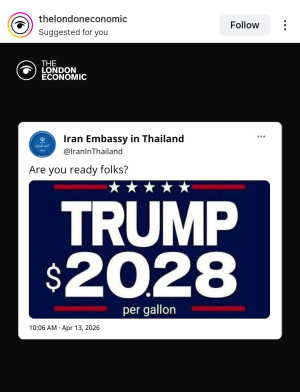
How will this affect the price of gas?
While the price of gas dropped after the ceasefire was announced, that doesn't mean there will be long-lasting relief at the pumps."There's no going back to what we had," Mark Zandi, chief economist of Moody's Analytics, told USA Today (11). "At least not this year."
Even if a peace deal is reached — and the agreement were to hold — several analysts agree that gas prices won't go back to pre-war levels any time soon, especially since dozens of refineries and oil fields in the Gulf have sustained damage (12).
"We will have less oil than before," Clayton Seigel, senior fellow with the Energy Security and Climate Change Program at the Center for Strategic and International Studies, shared with The Hill (13). "That will keep pump prices somewhat elevated."
If a joint deal between the U.S. and Iran were reached, it would hypothetically stabilize supply and cause oil prices to fall, but new tolls — as well as possible higher insurance premiums for tankers passing through the strait — could keep prices elevated beyond pre-war levels.
Whatever happens, Americans may want to be prepared for more volatility at the pump (and the possibility of paying fuel premiums on items such as airline tickets). That might mean setting extra money aside in your budget for gas and travel, cutting down on unnecessary trips and maybe even going electric with your next car purchase.
Link Via Moneywise https://www.msn.com/en-us/news/worl...1&cvid=69dd2c4da8e14db89762377191906e27&ei=27
Article Sources
We rely only on vetted sources and credible third-party reporting. For details, see our ethics and guidelines.The Hill (1, 13); The Wall Street Journal (2); International Energy Agency (3); CTV News (4); Lloyd's List (5); Jonathan Karl/X (6); The Guardian (7); United Nations (8); The Star (9); EnergyNow (10); USA Today (11); Insurance Journal (12).