

You are using an out of date browser. It may not display this or other websites correctly.
You should upgrade or use an alternative browser.
You should upgrade or use an alternative browser.
Trump 47
- Thread starter PF5
- Start date
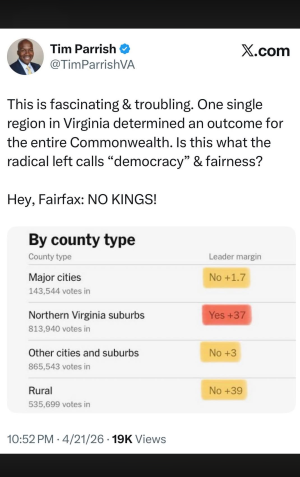

Isn't that usually where the swing voters live?

This is such stupidity. So, if the people that voted for it had been spread out over a larger area of land, that would make it OK? Because they have higher population density, that is what makes it a problem? I always wonder if the people that post this stuff believe it or if they are just trying to sway the fools that don't think.
This is such stupidity. So, if the people that voted for it had been spread out over a larger area of land, that would make it OK? Because they have higher population density, that is what makes it a problem? I always wonder if the people that post this stuff believe it or if they are just trying to sway the fools that don't think.
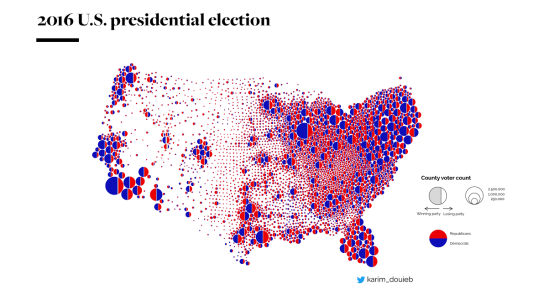
Wait until you see a map of how counties vote when a dem wins.

PJ-OSU
Deputy
This is such stupidity. So, if the people that voted for it had been spread out over a larger area of land, that would make it OK? Because they have higher population density, that is what makes it a problem? I always wonder if the people that post this stuff believe it or if they are just trying to sway the fools that don't think.

Stillwater Townie
Sheriff
So did Trump's mother!


PF5
Sheriff

378K views · 10K reactions | Trump: I took a lot of heat. I'd say 500%, 600%, but we also say sometimes 50%, 60%, different kind of calculation and people understand that better, but there are two ways of calculating it, but either way it doesn't mak
Trump: I took a lot of heat. I'd say 500%, 600%, but we also say sometimes 50%, 60%, different kind of calculation and people understand that better, but there are two ways of calculating it, but...
 www.facebook.com

Polds4OSU
Marshall
Can you guys imagine the outrage is AOC or Pete Buttigieg had moved into a Military base, taken over the house of one of the top spots of the military for that branch and then just stayed there and kept using it even after Biden Fired them ???
I KNOW many of you would have been outraged and beside yourself if one of them did this. But Noem gets a pass and gets to keep doing this on our tax payer dime? what a joke
Kristi Noem has continued using the waterfront House of the Commandant of the Coast Guard at Joint Base Anacostia-Bolling since ouster
WASHINGTON—Former Homeland Security Secretary Kristi Noem has continued using a waterfront house on a military base in Washington, D.C., that she took over as a cabinet member, according to people familiar with the matter.
A black Suburban SUV typically used by Noem was seen parked in front of the house earlier this week, those people said, and U.S. Coast Guard officials have spotted Noem on the base in recent days.
Noem moved into the house on Joint Base Anacostia-Bolling, which is typically designated for the commandant of the Coast Guard, after President Trump last year fired Linda Fagan, the commandant at the time. The Coast Guard generally falls under the purview of the Department of Homeland Security.
Noem has continued to use the house since Trump ousted her from DHS in early March. She officially left the job after Markwayne Mullin was confirmed as the new secretary.
Noem is now serving as Trump’s special envoy for the Shield of the Americas—Western Hemisphere, a security initiative created by the administration at the State Department.
The State Department and DHS didn’t respond for comment.
Before Noem was ousted by Trump, she faced questions from members of Congress about her residence at the base. “I will also tell you that I rent that facility,” she said during a hearing at the time. “I rent where I stay, and pay personal dollars to do that.”
The current Coast Guard commandant, Adm. Kevin Lunday, has told associates he plans to move into the house imminently, according to people familiar with the discussions. He currently lives in a nearly identical home next door, designated for the vice commandant, but wants to make room for that official to move in.
Typically, homeland security secretaries aren’t provided government housing, and as civilians, they normally wouldn’t need to live on a military base. But Noem became one of several Trump administration officials to move into military housing after paparazzi or demonstrators discovered their private residences.
Corey Lewandowski, who was Noem’s top aide at DHS, has been spotted at the Coast Guard house over the past year, according to people familiar with the matter, including as recently as this month, one of those people said.
“Scores of people have visited Ms. Noem at the house in a business capacity,” Lewandowski said in a statement through a lawyer.
Polds4OSU
Marshall
Justice Department drops probe into Fed Chair Jerome Powell
link via CBS News https://www.msn.com/en-us/money/new...1&cvid=69eb865c85184e47a2a87116a5b4c1e7&ei=21
Polds4OSU
Marshall
Well we know for sure he is going to fire another woman next...but WHICH one
The White House press secretary, 28, has been working in that position since Trump's second presidential term began in January 2025. A White House press secretary acts a spokesperson for the president. Karoline previously worked as Trump's campaign press secretary in 2024.
Questions arise about her distancing herself from the 79-year-old's administration due to her response at a brief White House press conference on April 22. It comes amid growing concern about the president's erratic behavior - just days ago, Trump made a disturbing sex comment on stage that stunned his audience into silence.
Karoline was asked by a reporter about the issue of Virginia's redistricting and why Trump, who is opposed to the referendum, didn't campaign more against it such as utilizing his Truth Social.
She gave a response that dodged the question and sparked conversation about her employment. Karoline replied, "That's a question that's political by nature. As you know, I'm not part of the President's political team anymore. I do sit here at the White House as a government employee."
Donald Trump has reportedly polled cabinet officials on whether he should fire his director of national intelligence Tulsi Gabbard over her stance on the war in Iran.
Gabbard is said to have attracted the president's displeasure after failing to condemn former counterterrorism chief Joe Kent following his dramatic exit last month, in which he quit his post and criticized the administration's decision to take the U.S. to war with Iran.
According to two people briefed on the discussions, Trump has disclosed his frustrations with Gabbard to other senior members of the administration and asked them whether he should replace her, The Guardian reports.
Signs of tension between Karoline Leavitt and Trump after admitting she's not on his political team anymore
Karoline Leavitt and her relationship with President Donald Trump is seemingly showing strains.The White House press secretary, 28, has been working in that position since Trump's second presidential term began in January 2025. A White House press secretary acts a spokesperson for the president. Karoline previously worked as Trump's campaign press secretary in 2024.
Questions arise about her distancing herself from the 79-year-old's administration due to her response at a brief White House press conference on April 22. It comes amid growing concern about the president's erratic behavior - just days ago, Trump made a disturbing sex comment on stage that stunned his audience into silence.
Karoline was asked by a reporter about the issue of Virginia's redistricting and why Trump, who is opposed to the referendum, didn't campaign more against it such as utilizing his Truth Social.
She gave a response that dodged the question and sparked conversation about her employment. Karoline replied, "That's a question that's political by nature. As you know, I'm not part of the President's political team anymore. I do sit here at the White House as a government employee."
Trump polled advisors on whether to fire Tulsi Gabbard
Donald Trump has reportedly polled cabinet officials on whether he should fire his director of national intelligence Tulsi Gabbard over her stance on the war in Iran.
Gabbard is said to have attracted the president's displeasure after failing to condemn former counterterrorism chief Joe Kent following his dramatic exit last month, in which he quit his post and criticized the administration's decision to take the U.S. to war with Iran.
According to two people briefed on the discussions, Trump has disclosed his frustrations with Gabbard to other senior members of the administration and asked them whether he should replace her, The Guardian reports.
Polds4OSU
Marshall
What about a Jesus that looks Like a Doctor? Could that person Lead it ?? Inquiring for a friend
"The Lord Jesus couldn't lead this delegation, couldn't lead this conference," GOP lawmaker throws party under bus
Rep. Troy Nehls (R-TX) lashed out at the dysfunction of his own party caucus in conversation with reporters on Thursday, as his party prepares for a string of critical votes on national security and funding.
Nehls, a far-right lawmaker from the Houston area with a history of controversies, has already decided against running for re-election this year, one of a number of incumbents choosing to head for the exits.
"This is so difficult up here," said Nehls. "We can't agree with much. I was in conference the other day, and you know, we were talking — I'm going to say next week is Hell Week. Next week is going to be Hell Week. We got FISA reauthorization, possibly this reconciliation, the farm bill. It's going to be hard, because you get two or three members that have an issue with one of those bills, it's hard."
"The Lord Jesus couldn't lead this delegation, couldn't lead this conference," he lamented. "It's hard. It is very, very hard. And when you have such controversy because you have such a small majority, you can see why we don't get anything done. We get very little done."
This comes at a moment when the reconciliation bill alone, which was designed to bypass Democrats to fund immigration enforcement for the remainder of Trump's term, faces sharp disagreement among Republican lawmakers over what to include in it.
It also comes as FISA reauthorization faces new challenges, with some Republican members accusing it of violating the privacy of gun owners.
"The Lord Jesus couldn't lead this delegation, couldn't lead this conference," GOP lawmaker throws party under bus
Rep. Troy Nehls (R-TX) lashed out at the dysfunction of his own party caucus in conversation with reporters on Thursday, as his party prepares for a string of critical votes on national security and funding.
Nehls, a far-right lawmaker from the Houston area with a history of controversies, has already decided against running for re-election this year, one of a number of incumbents choosing to head for the exits.
"This is so difficult up here," said Nehls. "We can't agree with much. I was in conference the other day, and you know, we were talking — I'm going to say next week is Hell Week. Next week is going to be Hell Week. We got FISA reauthorization, possibly this reconciliation, the farm bill. It's going to be hard, because you get two or three members that have an issue with one of those bills, it's hard."
"The Lord Jesus couldn't lead this delegation, couldn't lead this conference," he lamented. "It's hard. It is very, very hard. And when you have such controversy because you have such a small majority, you can see why we don't get anything done. We get very little done."
This comes at a moment when the reconciliation bill alone, which was designed to bypass Democrats to fund immigration enforcement for the remainder of Trump's term, faces sharp disagreement among Republican lawmakers over what to include in it.
It also comes as FISA reauthorization faces new challenges, with some Republican members accusing it of violating the privacy of gun owners.
Polds4OSU
Marshall

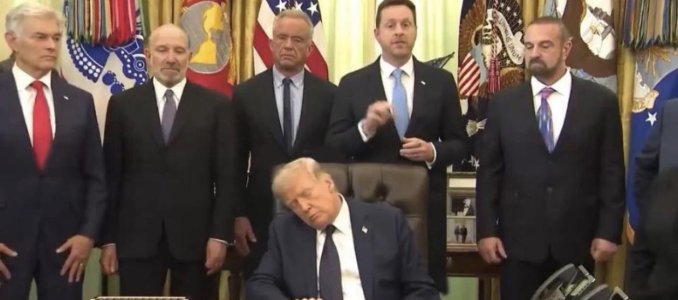
I'm sure ANY minute MAGA Republicans will be talking about how unfit "Sleepy Don" is for office. Right?... Riiight??
Edit: Photo is fake. This video is not though.
Last edited:
PF5
Sheriff
one website called him ´Dozy Don´...I laughed a little on that one...View attachment 20352
I'm sure ANY minute MAGA Republicans will be talking about how unfit "Sleepy Don" is for office. Right?... Riiight??
Polds4OSU
Marshall
Atlantic writer sued by Kash Patel 'inundated' with new sources
Sarah Fitzpatrick, The Atlantic investigative journalist behind last week’s bombshell story about FBI Director Kash Patel, has said she has since been “inundated” with messages from new sources corroborating her reporting.Fitzpatrick’s story alleged that Patel drinks to excess – so much so that, in one instance, breaching equipment was ordered to break into a locked bedroom when he did not respond to inquiries about his well-being. The profile and also characterized him as deeply paranoid about being fired by President Donald Trump.
Patel has denied the allegations, dismissed the article as a “hit piece,” and, on Monday, launched a $250 million defamation lawsuit against the magazine.
“I can say unequivocally that I never listen to the fake news mafia,” he said at a Department of Justice press conference Tuesday. “And when they get louder, it just means I’m doing my job.”
Speaking to the Radio Atlantic podcast one week after the article, Fitzpatrick was asked about the director’s retaliatory moves and said she was undaunted.
“My response is that I stand by every single word of this report,” she said. “We were very diligent. We were very careful. It went through multiple levels of editing, review, care.
“And I think one of the things that has been most gratifying, after – immediately after the story published was, I have been inundated by additional sourcing going up to the highest levels of the government, thanking us for doing the work, providing additional corroborating information.”
Fitzpatrick said that she used more than two dozen sources for her original report, characterizing the officials she spoke to as “people who felt that not only was this conduct embarrassing, unbecoming, but that it was a national security vulnerability, and that Americans were perhaps less safe as a result.”
Asked about some of the more shocking details in her report, she said: “I had never heard anything like this as a reporter, and I think I spent a very long time, a very diligent amount of time checking it out because it was so explosive.
“And I think the fact that this was known throughout the FBI, throughout the Justice Department, that it reached the White House is because it was so alarming. And people were really frightened.”
She said some of her sources were not merely panicking but profoundly emotional in expressing their concerns to her, describing them as “grown men who have done nothing but counterintelligence and solving some of the worst-of-the-worst crimes who are not easily scared, intimidated, concerned.”
“They were frightened,” she said. “And that really stuck with me.”

Polds4OSU
Marshall
Welp they are bringing back firing squads
Similar threads

- Replies
- 0
- Views
- 118


- Replies
- 3
- Views
- 201
- Replies
- 48
- Views
- 2K