

You are using an out of date browser. It may not display this or other websites correctly.
You should upgrade or use an alternative browser.
You should upgrade or use an alternative browser.
Trump 47
- Thread starter PF5
- Start date
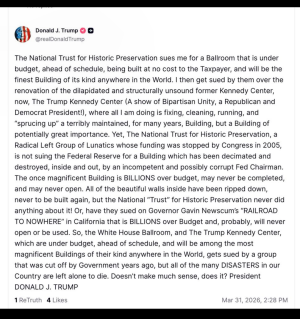

For some reason he and his supporters seem to be under the impression that just because he's not using tax dollars that he is free to do literally whatever he wants to the White House.
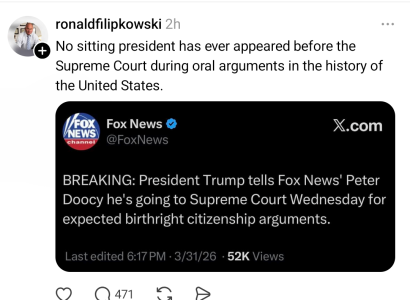




Is anyone else disgusted by the fact that Republicans can't seem to stop themselves from worshipping our megalomaniac in chief and and putting his name on literally anything possible?...
I plan to redact his signature when it starts appearing on money.
Link via The Independent
View attachment 19762
Lawyers for man accused of killing Charlie Kirk make claim bullet doesn’t match rifle
The success of a forensic ballistics analysis largely depends on the size and condition of the bullet fragmentswww.the-independent.com
So is this legit? Because the ballistics not matching on the alleged murder weapon seems like a really big problem for the prosecution.
Oh please let this happen and let it be televised.
Normally I'd rather watch paint dry than tune in to legal proceedings but this would make the OJ trial look like traffic court.

Polds4OSU
Marshall
Yea, his lawyers filed in court yesterday that the ATF data could not conclusively prove the bullet recovered was fired from their clients gunSo is this legit? Because the ballistics not matching on the alleged murder weapon seems like a really big problem for the prosecution.

PF5
Sheriff
Wait, they may have arrested a patsy?! Color me shocked…Yea, his lawyers filed in court yesterday that the ATF data could not conclusively prove the bullet recovered was fired from their clients gun
Polds4OSU
Marshall
The sheriff that talked the guy into admitting to it and turning himself in retired yesterday after this news landed tooWait, they may have arrested a patsy?! Color me shocked…

And inconclusive finding (rather than an exclusionary finding) in ballistics examinations isn’t as big of a problem as you might think.So is this legit? Because the ballistics not matching on the alleged murder weapon seems like a really big problem for the prosecution.
The ability to make a “match” from ballistic markings depends on many factors including the size of the bullet fragment being used.
It’s the difference between “I can neither confirm nor exclude the possibility that this bullet fragment that was recovered from the body came from this rifle” and “I can exclude this bullet fragment as coming from this rifle”.
Unable to conclusively “match” isn’t the same thing as “doesn’t match” in forensic examinations.
Polds4OSU
Marshall
I've read that Inconclusive ballistics data can occur at up to a 20% rate for the ATF and some non ATF labs up to 50% rateAnd inconclusive finding (rather than an exclusionary finding) in ballistics examinations isn’t as big of a problem as you might think.
The ability to make a “match” from ballistic markings depends on many factors including the size of the bullet fragment being used.
It’s the difference between “I can neither confirm nor exclude the possibility that this bullet fragment that was recovered from the body came from this rifle” and “I can exclude this bullet fragment as coming from this rifle”.
Unable to conclusively “match” isn’t the same thing as “doesn’t match” in forensic examinations.
In this case they are saying the data is in that 20% failure rate of conclusivity for ATF labs

And inconclusive finding (rather than an exclusionary finding) in ballistics examinations isn’t as big of a problem as you might think.
The ability to make a “match” from ballistic markings depends on many factors including the size of the bullet fragment being used.
It’s the difference between “I can neither confirm nor exclude the possibility that this bullet fragment that was recovered from the body came from this rifle” and “I can exclude this bullet fragment as coming from this rifle”.
Unable to conclusively “match” isn’t the same thing as “doesn’t match” in forensic examinations.
Pretty inappropriate headline based on the content. I suppose they put "lawyers claim" to cover themselves, but as a casual reader, that looks like the bullet could not have come from his gun, not that they just have limited information.
Defense lawyers often try to confuse the issues when it comes to forensic reports. You see this in DNA a whole lot too.....suprisingly. If they can get one single juror to misinterpret what a criminalist testifies to, they at least have a shot at a hung jury. Furthermore, the criminalists are usually "scientists" that are very precise with their language and won't vary into layman language to explain the results so I have to do it for the jury in closing. For instance, they only fairly recently have been willing to say they have a "DNA match" between a crime scene sample and a known sample of the suspect. Even now, their report will say something like "selecting an unrelated individual at random from the population having this DNA profile is at least one in 620 septillion". Then I ask them the population of the earth is. Then they'll call it a "match", but they'll not say it is an impossibility that the sample is from someone other than the suspect. They'll fall back to that number in their report. Then I have to argue that a one in 620 septillion possibility of that sample being someone else's is in no way "reasonable doubt" of the fact.Pretty inappropriate headline based on the content. I suppose they put "lawyers claim" to cover themselves, but as a casual reader, that looks like the bullet could not have come from his gun, not that they just have limited information.
Last edited:
Polds4OSU
Marshall
“He’s gone.” Podcaster and conspiracy theorists Alex Jones turns on Trump. Says the president is in “free fall”, and it’s time to “cut bait” with him. Jones adds, “He’s not the man he was last year. We need to be sad about Trump. This is not funny. This is not good. But he’s gone. And that’s it.”

 www.threads.com
Mike Sington (@mikesington) on Threads
“He’s gone.” Podcaster and conspiracy theorists Alex Jones turns on Trump. Says the president is in “free fall”, and it’s time to “cut bait” with him. Jones adds, “He’s not the man he was last year. We need to be sad about Trump. This is not funny. This is not good. But he’s gone. And that’s it.”
www.threads.com
"selecting an unrelated individual at random from the population having this DNA profile is at least one in 620 septillion"
For some reason this literally made me laugh out loud. I know how I would interpret this statement, but I can only imagine how some other people I know would. Then there is the average Joe out there trying to interpret some of that testimony. Sounds like you did a good job of putting it in terms they can understand.
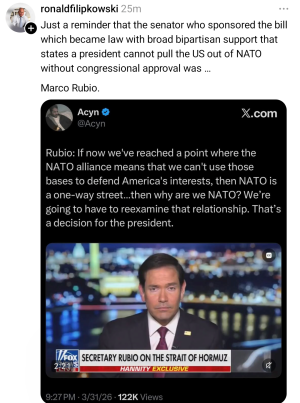
My follow up question when they throw out a number like 62 septillion is always, "I became a lawyer because I'm not so good with math. how many zeros follow the 62 to be 62 septillion? Then they tell me 24 zeros. Then if I feel I have an intellectually thick jury, I'll break out the easel and take the time to write 62 followed by twenty four zeros, "62,000,000,000,000,000,000,000,000" and ask the criminalist if I got it right before asking them what the population of the earth is (approx 8.2 billion) and sometimes how many zeros in 8.2 billion (8).For some reason this literally made me laugh out loud. I know how I would interpret this statement, but I can only imagine how some other people I know would. Then there is the average Joe out there trying to interpret some of that testimony. Sounds like you did a good job of putting it in terms they can understand.

Defense lawyers often try to confuse the issues when it comes to forensic reports. You see this in DNA a whole lot too.....suprisingly. If they can get one single juror to misinterpret what a criminalist testifies to, they at least have a shot at a hung jury. Furthermore, the criminalists are usually "scientists" that are very precise with their language and won't vary into layman language to explain the results so I have to do it for the jury in closing. For instance, they only fairly recently have been willing to say they have a "DNA match" between a crime scene sample and a known sample of the suspect. Even now, their report will say something like "selecting an unrelated individual at random from the population having this DNA profile is at least one in 620 septillion". Then I ask them the population of the earth is. Then they'll call it a "match", but they'll not say it is an impossibility that the sample is from someone other than the suspect. They'll fall back to that number in their report. Then I have to argue that a one in 620 septillion possibility of that sample being someone else's is in no way "reasonable doubt" of the fact.
For some reason this literally made me laugh out loud. I know how I would interpret this statement, but I can only imagine how some other people I know would. Then there is the average Joe out there trying to interpret some of that testimony. Sounds like you did a good job of putting it in terms they can understand.
Similar threads

- Replies
- 0
- Views
- 123


- Replies
- 3
- Views
- 209
- Replies
- 48
- Views
- 2K