

You are using an out of date browser. It may not display this or other websites correctly.
You should upgrade or use an alternative browser.
You should upgrade or use an alternative browser.
Trump 47
- Thread starter PF5
- Start date


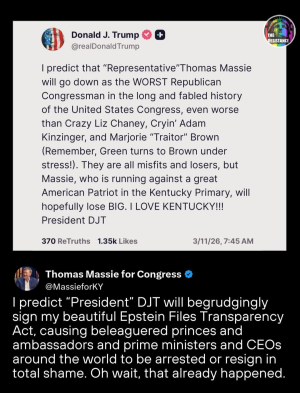
He’s bombing Iran and has time to be upset Thomas Massie still wants to read more names aloud from the Epstein files.
Last edited:

Polds4OSU
Marshall
Trump found out DOJ dropped the law firm sanctions case from a WSJ report — and lost it.
"I never signed off on that," he told aides in the Oval Office.
Top DOJ officials thought they had White House clearance. Trump hadn't been told.
His standing rule: never drop a case willingly.
Four judges already ruled the orders unconstitutional.

 www.threads.com
"I never signed off on that," he told aides in the Oval Office.
Top DOJ officials thought they had White House clearance. Trump hadn't been told.
His standing rule: never drop a case willingly.
Four judges already ruled the orders unconstitutional.
Ashley Renee (@ash.renee411) on Threads
Trump found out DOJ dropped the law firm sanctions case from a WSJ report — and lost it. "I never signed off on that," he told aides in the Oval Office. Top DOJ officials thought they had White House clearance. Trump hadn't been told. His standing rule: never drop a case willingly. Four...
www.threads.com


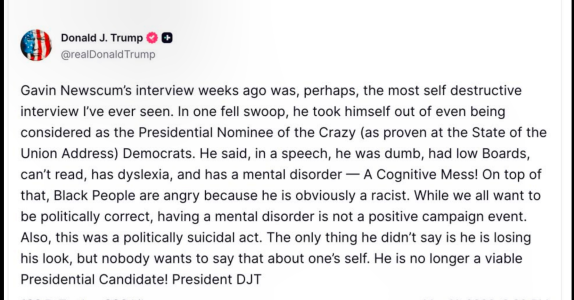
Having a mental disorder is not a positive campaign event

Polds4OSU
Marshall
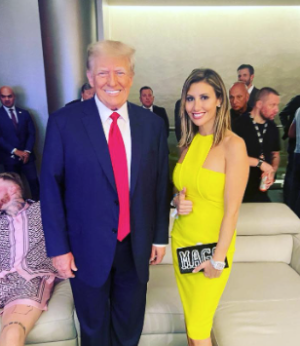
Trump's former Personal Attorney and Legal Spokesperson Alina Habba has had a wild ride since Dec 2025. In the last 3 months
She resigned form her Trump appointed role as US Attorney for New Jersey in Dec 2025
Filed for Divorce in Feb 2026 which was quickly granted and processed
Was announced as the Senior Advisor to Pam Bondi (who lives and works in Washington DC) in March 2026
and Today it is learned she has bought a House in Florida and is moving next to Mara Lago
She resigned form her Trump appointed role as US Attorney for New Jersey in Dec 2025
Filed for Divorce in Feb 2026 which was quickly granted and processed
Was announced as the Senior Advisor to Pam Bondi (who lives and works in Washington DC) in March 2026
and Today it is learned she has bought a House in Florida and is moving next to Mara Lago
Trump's former Personal Attorney and Legal Spokesperson Alina Habba has had a wild ride since Dec 2025. In the last 3 months
She resigned form her Trump appointed role as US Attorney for New Jersey in Dec 2025
Filed for Divorce in Feb 2026 which was quickly granted and processed
Was announced as the Senior Advisor to Pam Bondi (who lives and works in Washington DC) in March 2026
and Today it is learned she has bought a House in Florida and is moving next to Mara Lago
View attachment 19279
I CAN FIX HER
Polds4OSU
Marshall
'Extra-court discovery': Trump admin sued over mandatory survey forcing schools to turn over 'sensitive student data' as states decry 'witch hunt'
The Trump administration is unlawfully trying to force universities and colleges nationwide to release large collections of "sensitive student information," a federal lawsuit filed on Wednesday alleged.In August 2025, President Donald Trump issued a memorandum outlining an effort to track "consideration of race in higher education admissions." That same day, Department of Education Secretary Linda McMahon announced a sweeping change in how institutions of higher education must report student data to the federal government.
Link Via Law & Crime Journal

PF5
Sheriff

Republicans identifying as MAGA hit new record high
The MAGA label now defines GOP identity, signaling how culture and policy are converging ahead of the 2026 midterms.
 www.newsweek.com
Polds4OSU
Marshall
Trump Responds to Iran dropping out of the World Cup
“Considering that this corrupt regime has assassinated our leader, under no circumstances can we participate in the World Cup,” Ahmad Donyamali
Trump Responded saying
“The Iran National Soccer Team is welcome to The World Cup, but I really don’t believe it is appropriate that they be there, for their own life and safety. Thank you for your attention to this matter! President DONALD J. TRUMP”
link via Newsweek
“Considering that this corrupt regime has assassinated our leader, under no circumstances can we participate in the World Cup,” Ahmad Donyamali
Trump Responded saying
“The Iran National Soccer Team is welcome to The World Cup, but I really don’t believe it is appropriate that they be there, for their own life and safety. Thank you for your attention to this matter! President DONALD J. TRUMP”
link via Newsweek
Last edited:
Stillwater Townie
Sheriff
Where is ICE when they are needed in the worst way? Or are Iranian sleeper cells just a hoax?

 newrepublic.com
Trump Says He Knows Where Iran Sleeper Cells Are—But Won’t Arrest Them
Donald Trump assured reporters he was absolutely on top of it.
newrepublic.com
Last edited:
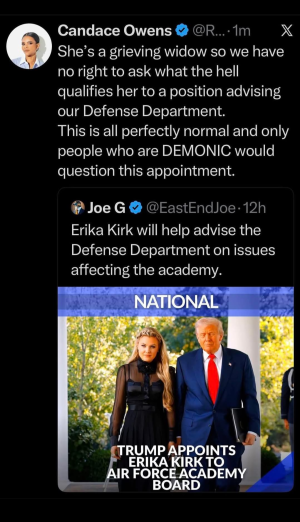
PF5
Sheriff
The U.S. President has sole authority to authorize the use of U.S. nuclear weapons. This authority is inherent in his constitutional role as Commander in Chief. The President can seek advice from his senior military leaders; those military leaders are then required to transmit and implement the orders authorizing nuclear use if the President decides to employ nuclear weapons. As General John Hyten stated in a congressional confirmation hearing, his job as the Commander of U.S. Strategic Command (STRATCOM) would be to give advice, while the authority to order a launch lies with the President.
General Mark Milley, then the Chairman of the Joint Chiefs of Staff (CJCS), made a similar point in a memorandum he provided to Congress in September 2021. He stated that he is a part of the "chain of communication," in his role as the President's primary military advisor, but he is not in the "chain of command" for authorizing a nuclear launch. He also stated that, if the President ordered a launch, the CJCS would participate in a "decision conference" to authenticate the presidential orders and to ensure that the President was "fully informed" about the implications of the launch.
The President, however, does not need the concurrence of either his military leaders or the U.S. Congress to order the launch of nuclear weapons. Neither the military nor Congress can overrule these orders. As former STRATCOM Commander General Robert Kehler has written, members of the military are bound by the Uniform Code of Military Justice "to follow orders provided they are legal and have come from competent authority." But questions about the legality of the order—whether it is consistent with the requirements, under the laws of armed conflict (LOAC), for necessity, proportionality, and distinction—are more likely to lead to consultations and changes in the President's order than to a refusal by the military to execute the order.
General Mark Milley, then the Chairman of the Joint Chiefs of Staff (CJCS), made a similar point in a memorandum he provided to Congress in September 2021. He stated that he is a part of the "chain of communication," in his role as the President's primary military advisor, but he is not in the "chain of command" for authorizing a nuclear launch. He also stated that, if the President ordered a launch, the CJCS would participate in a "decision conference" to authenticate the presidential orders and to ensure that the President was "fully informed" about the implications of the launch.
The President, however, does not need the concurrence of either his military leaders or the U.S. Congress to order the launch of nuclear weapons. Neither the military nor Congress can overrule these orders. As former STRATCOM Commander General Robert Kehler has written, members of the military are bound by the Uniform Code of Military Justice "to follow orders provided they are legal and have come from competent authority." But questions about the legality of the order—whether it is consistent with the requirements, under the laws of armed conflict (LOAC), for necessity, proportionality, and distinction—are more likely to lead to consultations and changes in the President's order than to a refusal by the military to execute the order.
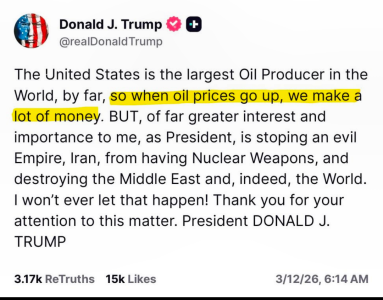
Stillwater Townie
Sheriff
Sounds like billionaire talk who took a lot of campaign or bribe money from the oil companies.
Similar threads

- Replies
- 0
- Views
- 120


- Replies
- 3
- Views
- 204
- Replies
- 48
- Views
- 2K