Philosophy & Religion Thread

Big guess we are all novices here on philosophy.

I've dabbled in some stoics, mostly Marcus Aurelius and Epictetus. Big fan of Epictetus, wish I could live up to his philosophy. Have mentioned secular Buddhism but honestly have just seen some videos and things.

Have this on my reading list, just have not gotten to it yet:

I mentioned earlier that I read Taking The Leap by Pema Chodran. She referenced Thich Nhǎt Han often.

I took an Asian Philosophy class one semester at OSU. I was a staunch Christian, but enjoyed it more than anticipated. I don’t remember much from the course, unfortunately.

I also took Logical and Critical Thinking. Loved that course. Not really philosophy, but gave me a framework that has served me well over the years.
 
So we have had a lot of posts on religion, how about a few on philosophy? What schools of philosophy or philosophers stand out to you?

I only took one philosophy class in college (Logic and Critical Thinking), and while it was an incredibly useful class, I am pretty much a novice in this topic.
The Declaration of Independence is the greatest expression of Natural Law ever written.
 
So we have had a lot of posts on religion, how about a few on philosophy? What schools of philosophy or philosophers stand out to you?

I only took one philosophy class in college (Logic and Critical Thinking), and while it was an incredibly useful class, I am pretty much a novice in this topic.
I’ve shared thoughts on “soul mate” which is a concept that comes from Platonic Gnosticism.

Neo-Gnosticism has become the default worldview in our culture. It began with Descartes, “I think therefore I am.” It has become “I think is what I am.” Whereas in classical Gnosticism, the dualism is spirit and material, the spirit is true self and material body is non-self; in neo-Gnosticism the mind is true self And the body is non-self. In this view it makes perfect sense to modify the non-self body to match the true self mind. It is also perfectly consistent to say things like “trans are the most highly evolved members of society” because they were brave enough to modify their nonself bodies to match their true self minds.
 
In this view it makes perfect sense to modify the non-self body to match the true self mind.
In health care ethics we have to judge whether or not the patient is capable of making rational decisions about their own care. Philosophically, we have to judge it from the patient's point of view, which means understanding their worldview. It has to be rational to them, and not to me or us.
 
So we have had a lot of posts on religion, how about a few on philosophy? What schools of philosophy or philosophers stand out to you?

I only took one philosophy class in college (Logic and Critical Thinking), and while it was an incredibly useful class, I am pretty much a novice in this topic.
This goes in hand with my pastoral profession, but I’m a big fan of Cicero’s work on rhetoric.
 
Important life lessons learned from Star Trek:
Boldly go everywhere.
Be logical.
Hail on all frequencies.
The needs of the many outweigh the needs of the one.
Live long and prosper.
And don’t wear red.
 
@GratefulPoke you have studied more Buddhism than I have. What are some of the aspects you find most beneficial or important? Is it more of the life philosophy versus the religious ritual?

It sounds like it blends well with Christian principles, but I know fundamentalists find that sacrilegious.
 
I’ve shared thoughts on “soul mate” which is a concept that comes from Platonic Gnosticism.

Neo-Gnosticism has become the default worldview in our culture. It began with Descartes, “I think therefore I am.” It has become “I think is what I am.” Whereas in classical Gnosticism, the dualism is spirit and material, the spirit is true self and material body is non-self; in neo-Gnosticism the mind is true self And the body is non-self. In this view it makes perfect sense to modify the non-self body to match the true self mind. It is also perfectly consistent to say things like “trans are the most highly evolved members of society” because they were brave enough to modify their nonself bodies to match their true self minds.
I'm not sure I agree with this. I think now more than ever, there is not one default worldview that people adhere to. It varies from person to person and a plurality has a mishmash of several competing or incompatible worldviews. The time where most people had similar worldviews as other people living at the same time seems to be over.

With the trans population, I do not see many people holding them up as the most highly evolved members of society due to descartian dualism or not. I do see them being viewed as a population to protect as they are statistically among the most vulnerable population among us.
 
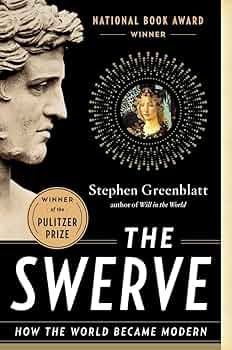
I read this book last year. It's amazing, thought provoking, boring yet very interesting and I highly recommend it.

1771860085726.png

The Swerve: How the World Became Modern by Stephen Greenblatt is a Pulitzer Prize-winning book that tells the story of how the rediscovery of the ancient Roman poem On the Nature of Things by Lucretius helped spark the Renaissance and shape modern thought. The book follows Renaissance book hunter Poggio Bracciolini as he finds the manuscript, which contains radical ideas about materialism, atoms, and the absence of divine intervention, ideas that influenced thinkers from Galileo to Darwin and beyond. Greenblatt argues that this "swerve" from oblivion was a pivotal moment in history, shifting the world's intellectual trajectory.

Also Epicureanism for the win.
 
Last edited:
I'm not sure I agree with this. I think now more than ever, there is not one default worldview that people adhere to. It varies from person to person and a plurality has a mishmash of several competing or incompatible worldviews. The time where most people had similar worldviews as other people living at the same time seems to be over.

With the trans population, I do not see many people holding them up as the most highly evolved members of society due to descartian dualism or not. I do see them being viewed as a population to protect as they are statistically among the most vulnerable population among us.
I think if you ask most people what their worldview is they won’t be able to tell you. However, if you ask them questions about worldview, their answers will more or less describe neo-Gnosticism.

I didn’t say “many” hold trans like this, I said “in this view it is perfectly consistent to” hold trans like this.
 
@GratefulPoke you have studied more Buddhism than I have. What are some of the aspects you find most beneficial or important? Is it more of the life philosophy versus the religious ritual?

It sounds like it blends well with Christian principles, but I know fundamentalists find that sacrilegious.
Despite practicing Buddhism for a number of years, I am not particularly well read on it. In Buddhism, practice is viewed as more important, so that has been my focus. In many ways it is ritual over belief, ritual over spiritual experience. But practice is also not the point either--it is just a container. This is probably best illustrated as when the Catholic monastic Thomas Merton met Zen master DT Suzuki for the first time, they participated in a tea ceremony (which are very solemn) and DT Suzuki started filling Thomas Merton's tea cup, but didn't stop when Merton signaled him to stop as it was already full. Instead, tea started overflowing the tea cup and began spilling all over the floor...and the two men burst out laughing.

The most beneficial thing for me has been the emphasis on the impermanence of things and non-attachment. I am personally wired for intense attachment and thus also wired for all of the things that come along with it greed (desire to cling to positive experience), hatred (aversion to negative experience) and ignorance (often synonymous with delusion). To loosen these things a bit has been incredibly beneficial. It is probably the single most important thing I have done for my long term well being.

I also think that Buddhist morality is one of the best equipped for the complexities of 21st century society. A great book on Buddhist morality is Mind of Clover by Robert Aitken, which goes into each of the 10 grave precepts. They are typically negatively framed, similar to the 10 commandments, but are often taught in a positive framework. So for example:

"Not killing" becomes "Let us encourage life"
"Not stealing" becomes "Respect the property of others; to see the gift not yet given"
"Not misusing sex" becomes "engage in sexual relationships with love, respect, and commitment"

and so on. Notice how the definitions of each precept are open ended. They are meant to be discovered for oneself and not commandments. Just a framework for a life best lived to avoid harm and needless suffering for oneself and others.

 
Last edited:
I think if you ask most people what their worldview is they won’t be able to tell you. However, if you ask them questions about worldview, their answers will more or less describe neo-Gnosticism.

I didn’t say “many” hold trans like this, I said “in this view it is perfectly consistent to” hold trans like this.
Agreed on the bolded part, but I don't agree with the rest of it.

Since most people don't view trans folks like that, wouldn't this suggest that your hypothesis is incorrect? I feel like the only prose grouping that would aptly fall into your description would be the tech bro crowd who are enthusiastic about transhumanism and the singularity, and they are a small minority of people.

On the right you have a plurality of people that subscribe to some level of blood and soil white christian nationalism which is a blend of postmodernism and national mysticism, and the tech bro movements, so two distinct groups. On the left you have no clear ideology at all, there are probably a dozen groups that had differing and often times oppositional worldviews, ranging from progressive Christianity to new age environmentalism to identitarianism to historical materialism.

If there was a consensus on the left, you wouldn't see a circular firing squad commence so often.
 
I asked AI to create a Philosophy test for me, I answered it and this was the outcome. I liked this outcome because i've never prescribed to one individual philosophy at all and I think each can have some useful wisdom hidden in it

Your Combined Philosophy: “The Rational Virtue-Builder”

If we blend your results, your personal philosophy looks like this:
You believe the meaning of life isn’t given — you build it.
(existentialism)
You believe your character determines right and wrong.
(virtue ethics)
You believe reason, self‑control, and staying grounded matter.
(Stoicism)
You cope with challenges by staying steady, using humor, and helping others move forward.
(a resilience‑based blend of Stoic + practical wisdom)


You’re someone who believes people should shape their own meaning, stay rational in their choices, and focus on building a strong, virtuous character — while keeping others moving forward.

I've also set up my AI so I Say "Computer" and it activates and starts listening to me....just like Star Trek.....we are only a few years away from "Computer: Earl Grey, Hot"
 
Despite practicing Buddhism for a number of years, I am not particularly well read on it. In Buddhism, practice is viewed as more important, so that has been my focus. In many ways it is ritual over belief, ritual over spiritual experience. But practice is also not the point either--it is just a container. This is probably best illustrated as when the Catholic monastic Thomas Merton met Zen master DT Suzuki for the first time, they participated in a tea ceremony (which are very solemn) and DT Suzuki started filling Thomas Merton's tea cup, but didn't stop when Merton signaled him to stop as it was already full. Instead, tea started overflowing the tea cup and began spilling all over the floor...and the two men burst out laughing.

The most beneficial thing for me has been the emphasis on the impermanence of things and non-attachment. I am personally wired for intense attachment and thus also wired for all of the things that come along with it greed (desire to cling to positive experience), hatred (aversion to negative experience) and ignorance (often synonymous with delusion). To loosen these things a bit has been incredibly beneficial. It is probably the single most important thing I have done for my long term well being.

I also think that Buddhist morality is one of the best equipped for the complexities of 21st century society. A great book on Buddhist morality is Mind of Clover by Robert Aitken, which goes into each of the 10 grave precepts. They are typically negatively framed, similar to the 10 commandments, but are often taught in a positive framework. So for example:

"Not killing" becomes "Let us encourage life"
"Not stealing" becomes "Respect the property of others; to see the gift not yet given"
"Not misusing sex" becomes "engage in sexual relationships with love, respect, and commitment"

and so on. Notice how the definitions of each precept are open ended. They are meant to be discovered for oneself and not commandments. Just a framework for a life best lived to avoid harm and needless suffering for oneself and others.
Thanks for sharing. This was even more than I expected. I plan to come back and read it again, so I can sit with it a bit longer. I’ll check out Mind of Clover as it sounds like a worthwhile read. I appreciate the thoughtful explanation.
 
Since most people don't view trans folks like that, wouldn't this suggest that your hypothesis is incorrect?
Depends on what you mean by that. If you mean my hypothesis that neo-gnosticism is the default worldview in our society, then maybe. The only way to prove it would be to ask people questions about their worldview and see how many were basically neo-gnostic.

If you are talking about "trans being the most highly evolved" being entirely consistent with neo-gnosticism, then absolutely not. There are some who hold the view, and it is entirely consistent with neo-gnosticism whether many people hold it or not. If there were only one neo-gnostic left in the world it would still be entirely consistent with neo-gnosticism.

On the right you have a plurality of people that subscribe to some level of blood and soil white christian nationalism which is a blend of postmodernism and national mysticism, and the tech bro movements, so two distinct groups. On the left you have no clear ideology at all, there are probably a dozen groups that had differing and often times oppositional worldviews, ranging from progressive Christianity to new age environmentalism to identitarianism to historical materialism.
And within pretty much all those groups you will find "what I think I am is what I am," particularly on the left.
 
And within pretty much all those groups you will find "what I think I am is what I am," particularly on the left.
I think you are oversimplifying.

People of faith tend to want to attribute a similar level of faith in people without faith, hence the common "Atheism is a religion!"

The reality, when you talk to those people, they often have a wide variety of feelings on these subjects and those feelings are fluid as it is unknown. I think very few live forever in a "what I think is what I am."
 
Depends on what you mean by that. If you mean my hypothesis that neo-gnosticism is the default worldview in our society, then maybe. The only way to prove it would be to ask people questions about their worldview and see how many were basically neo-gnostic.

If you are talking about "trans being the most highly evolved" being entirely consistent with neo-gnosticism, then absolutely not. There are some who hold the view, and it is entirely consistent with neo-gnosticism whether many people hold it or not. If there were only one neo-gnostic left in the world it would still be entirely consistent with neo-gnosticism.


And within pretty much all those groups you will find "what I think I am is what I am," particularly on the left.
You called neo-gnosticism the default worldview in your previous post. Then you clarified that you think it is the default ideology on the left. Default meaning majority opinion or most commonly held opinion. In this post, you share you don't have the data to support that presupposition and would need to poll people. This is my point. You are misreading a segment of the population you are not a part of as a self described conservative. The only group that cleanly meets your hypothesis would be "tech bro" culture due to their views on transhumanism, which is a minority ideology not on the left, but on the right. But that group is not one that you listed and despite me bringing them up, you seem set on ignoring that at this time.

I do spend a good deal of time in progressive and leftist spaces and largely identify as one at this point. With leftists, historical materialism is the plurality position, which shouldn't be much of a surprise, but this is still not a majority position. That school of philosophy posits that ideas, culture and religion are all downstream of the material realities and economic conditions they inhabit. This school of thought emphasizes the physical over the mental or spiritual, which they see as effects from the physical. That is nearly the opposite epistemology as the one you say they espouse.

I’ve shared thoughts on “soul mate” which is a concept that comes from Platonic Gnosticism.

Neo-Gnosticism has become the default worldview in our culture. It began with Descartes, “I think therefore I am.” It has become “I think is what I am.” Whereas in classical Gnosticism, the dualism is spirit and material, the spirit is true self and material body is non-self; in neo-Gnosticism the mind is true self And the body is non-self. In this view it makes perfect sense to modify the non-self body to match the true self mind. It is also perfectly consistent to say things like “trans are the most highly evolved members of society” because they were brave enough to modify their nonself bodies to match their true self minds.
Again, with your posts, you are working your way back to the idea that people on the left think trans folks are the "most highly evolved members of society" and that is not reality. That is not an idea I see in progressive and leftist spaces, only one of support, to treat them as equals and a desire to protect them from harm. The idea that you are espousing is just a right wing opinion of how left wing people think and act. The very definition of a strawman.
 
Last edited:
Back
Top