Philosophy & Religion Thread

That is a great question. I actually think orthodox Christianity is ether pantheist or panentheist if one buys into the omnipresence of God. If God is omnipresent he would be in all things then, no?

Process theology rejects omnipresence (along with omnipotence and omniscience) due to lack of evidence and the weakness of biblical support for them upon further scrutiny.
Process theologians sound like a bunch of Doubting Thomases.
 
Process theologians sound like a bunch of Doubting Thomases.
jeff bridges opinion GIF


And also is flippant about serious concerns.
 
What is wrong with it? It sounds like they want evidence just like doubting THOMAS did. Not flipping it at all just short and concise.
Doubting thomas is a pejorative term. There are a chain of assumptions one has to choose to believe to come to that conclusion. Its knocking people that are not willing to jump to those conclusions and not really providing a substantive rebuttal.

Its also one of the worst parts of religion, right along with priming people for authoritarianism and a lack of a coherent moral code, IMO. Demanding evidence is a good thing and we demand it in just about every other area of life. It should be no different here.
 
Last edited:
Doubting thomas is a pejorative term. There are a chain of assumptions one has to choose to believe to come to that conclusion. Its knocking people that are not willing to jump to those conclusions and not really providing a substantive rebuttal.

Its also one of the worst parts of religion, right along with priming people for authoritarianism and a lack of a coherent moral code, IMO. Demanding evidence is a good thing and we demand it in just about every other area of life. It should be no different here.
IDK, I never considered "doubting Thomas" to be a pejorative, but rather a lesson that as Christians we should have faith. Additionally, Thomas got a bad rap, everyone always seems to forget that the other apostles also doubted until they saw the resurrected Jesus (Luke 24:11).
 
IDK, I never considered "doubting Thomas" to be a pejorative, but rather a lesson that as Christians we should have faith. Additionally, Thomas got a bad rap, everyone always seems to forget that the other apostles also doubted until they saw the resurrected Jesus (Luke 24:11).
Is "doubting thomas" ever used in a positive light? I feel like the answer is there.
 
I can't speak for everyone on how it is used, but when used correctly it is a lesson on faith, so in my opinion very positive.
Man I love the story of the doubters. These guys hung out w Jesus.

They saw him walk on water. Feed probably around 20,000 w mere morsels (although I think there’s more to that story). Cast out demons. Heal sick. Make the blind see. Pull coins out of fish. Raise the dead. Make the elites and wealthy look like fools.

And they all still doubted. And then He does the coolest thing ever. Invites them to touch him to see for themselves and casually says “Hey you guys have anything to eat? This whole resurrection thing gave me the munchies.”
 
I can't speak for everyone on how it is used, but when used correctly it is a lesson on faith, so in my opinion very positive.
What is the lesson on faith that is being taught when Thomas is brought up? The key to the episode of Thomas is in the last thing Jesus said.

John 20:29
Jesus said to him, “Have you believed because you have seen me? Blessed are those who have not seen and yet have believed.”

Thomas demanded proof, to see Jesus and touch the wounds. That isn't faith, it's empiric evidence.

It's like the lightswitch analogy which I've heard too many times in church. "It takes faith to turn on a lightswitch." No, it is empiric evidence. You've turned on a lightswitch before and the lights came on. If the lights don't come on you begin investigating the reasons why. You flip the switch again. You check another power source to see if the power is off. You check the breakers. You check the bulb. What's more, every single thing that happens after you flip the switch can be described in intimate detail as to exactly what happens that causes the light to come on, cause and effect. It's not faith. YOU may not be able to describe it all in intimate detail. But an electrician can, an engineer can, a physicist can. But you've experienced turning on a lightswitch before. Empirical evidence. That's what Thomas sought. Not faith. Jesus scolded him for it. Jesus told him he would have been blessed if he had simply accepted on faith.

Doubting Thomas is a pejorative. To be called a Doubting Thomas is to have your faith questioned, and when Cap used it he was questioning the faith of others, of serious theologians, and mostly because he didn't understand their quite legitimate theology.
 
What is the lesson on faith that is being taught when Thomas is brought up? The key to the episode of Thomas is in the last thing Jesus said.

John 20:29
Jesus said to him, “Have you believed because you have seen me? Blessed are those who have not seen and yet have believed.”

Thomas demanded proof, to see Jesus and touch the wounds. That isn't faith, it's empiric evidence.

It's like the lightswitch analogy which I've heard too many times in church. "It takes faith to turn on a lightswitch." No, it is empiric evidence. You've turned on a lightswitch before and the lights came on. If the lights don't come on you begin investigating the reasons why. You flip the switch again. You check another power source to see if the power is off. You check the breakers. You check the bulb. What's more, every single thing that happens after you flip the switch can be described in intimate detail as to exactly what happens that causes the light to come on, cause and effect. It's not faith. YOU may not be able to describe it all in intimate detail. But an electrician can, an engineer can, a physicist can. But you've experienced turning on a lightswitch before. Empirical evidence. That's what Thomas sought. Not faith. Jesus scolded him for it. Jesus told him he would have been blessed if he had simply accepted on faith.

Doubting Thomas is a pejorative. To be called a Doubting Thomas is to have your faith questioned, and when Cap used it he was questioning the faith of others, of serious theologians, and mostly because he didn't understand their quite legitimate theology.
I’m a simple man when it comes to faith. When @GratefulPoke said, “Process theology rejects omnipresence (along with omnipotence and omniscience) due to lack of evidence and the weakness of biblical support for them upon further scrutiny.” it sounds like they want proof just like doubting Thomas did. How am I wrong? I’m not being flippant as @GratefulPoke thinks. I want to know the difference.
 
I’m a simple man when it comes to faith. When @GratefulPoke said, “Process theology rejects omnipresence (along with omnipotence and omniscience) due to lack of evidence and the weakness of biblical support for them upon further scrutiny.” it sounds like they want proof just like doubting Thomas did. How am I wrong? I’m not being flippant as @GratefulPoke thinks. I want to know the difference.
Weak biblical support means that there isnt good support in the text for that idea or concept.

Ill give an example of another one you probably reject: the teachings of the Cathars.

The Cathars were a Christian sect that believed there were two Gods: the God of Abraham who was good and the God of this Age, who was evil. They came to this conclusion based on a particular reading of 2 Corinthians 4:4. There really isnt much support for that idea outside of that passage in the bible, but it didnt stop their movement from growing and many people from believing it at the time. The majority of them ended up being killed in the albengensian crusade and subsequent inquisition.

It is the same thing with omnipotence. There is really only one verse that spells it out: Jeremiah 32:7, whike the other verses commonly used to support the ide dont meet the definition of omnipotence. Either way, both of these approaches use esiegetical methods, which means one is introducing ones own biases and methods into the texts to support a conclusion you already had.

This might suprise you, but there is a lot of Christian doctrine that has weak scriptural support. And a fair amount of it was added hundreds of years or more after the events of the bible. Some, like dispensationism didnt exist until the 1830s with James Darby, others, like the Jesus Prayer didnt exist until Billy Sunday in the 1890s abd 1900s.
 
I’m a simple man when it comes to faith. When @GratefulPoke said, “Process theology rejects omnipresence (along with omnipotence and omniscience) due to lack of evidence and the weakness of biblical support for them upon further scrutiny.” it sounds like they want proof just like doubting Thomas did. How am I wrong? I’m not being flippant as @GratefulPoke thinks. I want to know the difference.
You missed the "and" part. When they say "lack of evidence" they aren't talking about empirical evidence like Thomas, they are talking about scriptural evidence, or scriptural support. Omnipresence, omnipotence, omniscience are theological constructs. There is no Bible verse that says "I am God and I am omnipresent." It is built on a number of different verses such as:

Psalms 139:7
Where shall I go from your Spirit?
Or where shall I flee from your presence?

Which indicates that the writer cannot flee from God's presence because God's presence is everywhere. The problem is, Psalms 139 is poetry and the writer is writing poetically and not didactically. So, the process theologians would look at this and say it is not evidence, it is poetry. One cannot evade God's presence because wherever one is God is with them because of their own mind and spirit which is bent towards God.

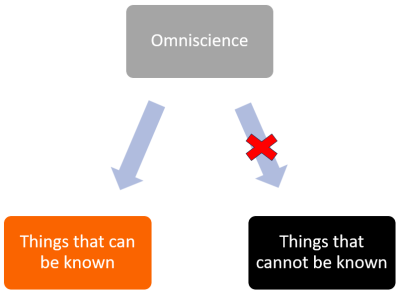
Similarly with omniscience and omnipotence. In my own studies I've come to a definition of omniscience that is probably different than the one you are used to, "all knowing". To me omniscience is "knowing all things that can possibly be known". Similarly, omnipotence would be "the ability to do all things that could possibly be done" which eliminates the logical conundrum "can God make a rock so big he himself can't lift it."

1771076215676.png
 
This might suprise you, but there is a lot of Christian doctrine that has weak scriptural support. And a fair amount of it was added hundreds of years or more after the events of the bible. Some, like dispensationism disnt exist until the 1830s with James Darby, others, like the Jesus Prayer didnt exist until Billy Sunday in the 1890s abd 1900s.
Yeah, like I said in my post on hell, hell as only eternal conscious torment is a fourth century AD convention. The rapture is a late 19th, early 20th century convention (Scofield study bible). The Young earth timeline was created in the 17th century.
 
You missed the "and" part. When they say "lack of evidence" they aren't talking about empirical evidence like Thomas, they are talking about scriptural evidence, or scriptural support. Omnipresence, omnipotence, omniscience are theological constructs. There is no Bible verse that says "I am God and I am omnipresent." It is built on a number of different verses such as:

Psalms 139:7
Where shall I go from your Spirit?
Or where shall I flee from your presence?

Which indicates that the writer cannot flee from God's presence because God's presence is everywhere. The problem is, Psalms 139 is poetry and the writer is writing poetically and not didactically. So, the process theologians would look at this and say it is not evidence, it is poetry. One cannot evade God's presence because wherever one is God is with them because of their own mind and spirit which is bent towards God.

Similarly with omniscience and omnipotence. In my own studies I've come to a definition of omniscience that is probably different than the one you are used to, "all knowing". To me omniscience is "knowing all things that can possibly be known". Similarly, omnipotence would be "the ability to do all things that could possibly be done" which eliminates the logical conundrum "can God make a rock so big he himself can't lift it."

View attachment 18620

Thank you. I understood that, I think.
 
Yeah, like I said in my post on hell, hell as only eternal conscious torment is a fourth century AD convention. The rapture is a late 19th, early 20th century convention (Scofield study bible). The Young earth timeline was created in the 17th century.
Hell as we currently define it is as you state, but the idea of reward or punishment after death goes a lot further back than that, likely to Persian rule. The persians were zoroastrian, but are viewed as similar to the Israelites due to their monotheistic religion and the Edict of Cyrus, which ended thr babylonian captivity and allowed them to return home.

Zoroastrianism left an indelible mark on judaism and even more so on Christianity. Judaism was a nondualist religion until that point in time, and after that it became less so. The essenes (the religious sect Jesus was most likely a part of) were dualist, believing in a cosmic battle between good and evil and having very strict codes of purity. These are zoroastrian ideas. The idea of satan (or the devil) is also zoroastrian in that religion that figure is called angra mainyu or ahriman.

Furthermore, the gospel of Matthew mentions the arrival of magi, arriving from the east to worship baby Jesus, seeing the sign in the stars. Magi is the title for multiple zoroastrian priests (its also where the term "mage" comes from) and they did study the stars as part of their religious practices. Persia is also to the east. This was done as a nod to the zoroastrian faith and to zorosastrian prophecy due to this massive influence.

At the end of the day, Christianity is a syncretic religion. It borrowed a lot of things from other contemporary religions.
 
What is the lesson on faith that is being taught when Thomas is brought up? The key to the episode of Thomas is in the last thing Jesus said.

John 20:29
Jesus said to him, “Have you believed because you have seen me? Blessed are those who have not seen and yet have believed.”

Thomas demanded proof, to see Jesus and touch the wounds. That isn't faith, it's empiric evidence.

It's like the lightswitch analogy which I've heard too many times in church. "It takes faith to turn on a lightswitch." No, it is empiric evidence. You've turned on a lightswitch before and the lights came on. If the lights don't come on you begin investigating the reasons why. You flip the switch again. You check another power source to see if the power is off. You check the breakers. You check the bulb. What's more, every single thing that happens after you flip the switch can be described in intimate detail as to exactly what happens that causes the light to come on, cause and effect. It's not faith. YOU may not be able to describe it all in intimate detail. But an electrician can, an engineer can, a physicist can. But you've experienced turning on a lightswitch before. Empirical evidence. That's what Thomas sought. Not faith. Jesus scolded him for it. Jesus told him he would have been blessed if he had simply accepted on faith.

Doubting Thomas is a pejorative. To be called a Doubting Thomas is to have your faith questioned, and when Cap used it he was questioning the faith of others, of serious theologians, and mostly because he didn't understand their quite legitimate theology.
What is your take on the distinction in Mathew where the author describes the women as instantly recognizing the resurrected Jesus and falling at his feet to worship him but verses later the author writes of the disciples needing proof? Is there more to this than just stories that get compiled?
 
What is the lesson on faith that is being taught when Thomas is brought up? The key to the episode of Thomas is in the last thing Jesus said.

John 20:29
Jesus said to him, “Have you believed because you have seen me? Blessed are those who have not seen and yet have believed.”

Thomas demanded proof, to see Jesus and touch the wounds. That isn't faith, it's empiric evidence.

It's like the lightswitch analogy which I've heard too many times in church. "It takes faith to turn on a lightswitch." No, it is empiric evidence. You've turned on a lightswitch before and the lights came on. If the lights don't come on you begin investigating the reasons why. You flip the switch again. You check another power source to see if the power is off. You check the breakers. You check the bulb. What's more, every single thing that happens after you flip the switch can be described in intimate detail as to exactly what happens that causes the light to come on, cause and effect. It's not faith. YOU may not be able to describe it all in intimate detail. But an electrician can, an engineer can, a physicist can. But you've experienced turning on a lightswitch before. Empirical evidence. That's what Thomas sought. Not faith. Jesus scolded him for it. Jesus told him he would have been blessed if he had simply accepted on faith.

Doubting Thomas is a pejorative. To be called a Doubting Thomas is to have your faith questioned, and when Cap used it he was questioning the faith of others, of serious theologians, and mostly because he didn't understand their quite legitimate theology.
You are trying too hard, you quoted the lesson on faith in John 20:29. In that moment, Thomas lacked faith, he needed evidence, so Jesus reminded him what true faith, saving faith should look like (see Hebrews 11:1).

Finally, you may use "doubting Thomas" as a pejorative, but it shouldn't be and I'm confused on how anyone could be insulted by it. For any non-believers, why would that offend them? I would think they would argue that Thomas was right to doubt. On the other side, as a Christian I can only hope that one day I can be compared to Thomas and all the work he did for spreading the gospel. He was an apostle for crying out loud. As I already mentioned, Thomas also gets a bad rap. Everyone seems to forget that the other apostles also doubted until they saw the risen Jesus (Luke 24:11).
 
You are trying too hard, you quoted the lesson on faith in John 20:29. In that moment, Thomas lacked faith, he needed evidence, so Jesus reminded him what true faith, saving faith should look like (see Hebrews 11:1).

Finally, you may use "doubting Thomas" as a pejorative, but it shouldn't be and I'm confused on how anyone could be insulted by it. For any non-believers, why would that offend them? I would think they would argue that Thomas was right to doubt. On the other side, as a Christian I can only hope that one day I can be compared to Thomas and all the work he did for spreading the gospel. He was an apostle for crying out loud. As I already mentioned, Thomas also gets a bad rap. Everyone seems to forget that the other apostles also doubted until they saw the risen Jesus (Luke 24:11).
Hebrews 11:1
Now faith is the assurance of things hoped for, the conviction of things not seen.

Once you have seen it, touched it, defined it, it is empirical evidence and no longer a matter of faith. The Hebrew term there for "assurance" is "hypostasis", a steadfastness of mind. Faith is having a steadfastness of mind without empirical evidence, "not seen".

Thomas was absolutely right to doubt, because he did not have faith, as any other person would that did not have faith. Thus Jesus said, "blessed are those who have not seen and believed."
 
Hell as we currently define it is as you state, but the idea of reward or punishment after death goes a lot further back than that, likely to Persian rule. The persians were zoroastrian, but are viewed as similar to the Israelites due to their monotheistic religion and the Edict of Cyrus, which ended thr babylonian captivity and allowed them to return home.

Zoroastrianism left an indelible mark on judaism and even more so on Christianity. Judaism was a nondualist religion until that point in time, and after that it became less so. The essenes (the religious sect Jesus was most likely a part of) were dualist, believing in a cosmic battle between good and evil and having very strict codes of purity. These are zoroastrian ideas. The idea of satan (or the devil) is also zoroastrian in that religion that figure is called angra mainyu or ahriman.

Furthermore, the gospel of Matthew mentions the arrival of magi, arriving from the east to worship baby Jesus, seeing the sign in the stars. Magi is the title for multiple zoroastrian priests (its also where the term "mage" comes from) and they did study the stars as part of their religious practices. Persia is also to the east. This was done as a nod to the zoroastrian faith and to zorosastrian prophecy due to this massive influence.

At the end of the day, Christianity is a syncretic religion. It borrowed a lot of things from other contemporary religions.
Yes, in the OT, Sheol was simply the place of the dead, and the concept of an afterlife didn't begin to develop within Judaism until about the second century BC, well after the diaspora and the Assyrian and Babylonian exiles; during the Hellenistic period.

There is some syncretism of Christianity in orthopraxy, because the Christian orthopraxy is nowhere spelled out in scripture. Orthodoxy? Was Jesus really an Essene? From Nazareth? I know the idea is popular among some, but there really isn't much evidence.
 
Back
Top