ICE

We can't follow the Constitution and laws Every time!!

Rep. Buddy Carter: "Some of the demands that the Democrats have put forth, we're not gonna be able to obtain that. We can't have a warrant every time."


Kristi Noem pulls plane off search for overboard Coast Guardsman to deport migrants​


President Donald Trump's pick to lead DHS angered senior Coast Guard officials by prioritizing deportation flights over search-and-rescue operations, and the tensions began just days into her tenure, on Feb. 4, 2025, when a 23-year-old guardsman went overboard into the Pacific Ocean from the cutter Waesche, four current and former officials told NBC News.

"The Coast Guard had surged ships and aircraft to the Pacific to find the Coast Guardsman," NBC reported. "Hours into the search, Noem learned that a Coast Guard C-130 that was supposed to fly detained migrants from California to Texas was among the aircraft over the Pacific looking for the missing Coast Guardsman, and she intervened, according to the two U.S. officials and the Coast Guard official."

"Noem verbally instructed the Acting Commandant of the Coast Guard, Admiral Kevin Lunday, to pull the plane off the search-and-rescue mission so it would not miss the migrant flight as part of the DHS’s so-called Alien Expulsion Operations, according to the two U.S. officials and the Coast Guard official," the report added.

The admiral notified National Command Center, which ordered the C-130 to fly to San Diego while other aircraft and ships continued searching, but the regional Coast Guard command in San Diego scrambled to find two available C-27s to fly the migrants to Texas, which allowed the C-130 to rejoin the search after about an hour.
 
BREAKING: A 66-year-old Army veteran was deported to Jamaica this week after a Georgia traffic stop for a turn signal triggered a disputed removal order, ending his 50 years of legal U.S. residency.

Authorities rejected congressional appeals and executed the order based on decades-old minor offenses, despite defense claims that the original hearing notice was mailed to an incorrect address.

More: https://www.atlantanewsfirst.com/20...veteran-deported-jamaica-after-ice-detention/
 
A federal judge orders the release of a Filipino man from an ICE detention facility in Washington, noting a "pattern of failures" in his medical care that "more likely than not resulted in the extreme pain and permanent disability."

 
WATCH: “That’s not America. That’s not Tennessee. I’m ashamed of those sons of bitches.”

A decorated veteran from a family of soldiers warns Republican anti-immigrant Stephen Miller bills are creating a “Gestapo”.


Does this guy deserve to get deported? Committed a crime 30 years ago and served a prison sentence. Was supposed to be deported because of it in the 90's but his country of origin (Laos-he came here as a child in 1980) didn't have the resources at the time to take him back and told our government no so he has been in legal limbo for decades. In prison he seemed to have turned his life around and has spent the last 30 years being a productive member or society. Got married and had kids along the way but because of his conviction was never eligible for a green card. So he does the check ins like he is supposed to. When Homeland started to get super aggressive in Minnesota he thought he was cooked but went to his check in and they told him he was fine. But in an effort to get the "worst of the worst" someone with a criminal conviction turns into an easy target so he gets deported anyways.

He gets to count against the stats that people use for those who shouldn't be here. But is this what we want to do? Scour the justice system for people convicted of crimes decades ago just to meet quotas?
 
Tinker v. Des Moines is a historic Supreme Court ruling from 1969 that cemented students’ rights to free speech in public schools.

Mary Beth Tinker was a 13-year-old junior high school student in December 1965 when she and a group of students decided to wear black armbands to school to protest the war in Vietnam. The school board got wind of the protest and passed a preemptive ban. When Mary Beth arrived at school on Dec. 16, she was asked to remove the armband and was then suspended.

Four other students were suspended as well, including her brother John Tinker and Chris Eckhardt. The students were told they could not return to school until they agreed to remove their armbands. The students returned after the Christmas break without armbands, but in protest, they wore black clothing for the remainder of the school year — and filed a First Amendment lawsuit.

Represented by the ACLU, the students and their families embarked on a four-year court battle that culminated in the landmark Supreme Court decision. Dan Johnston, a young lawyer also from Des Moines and just out of law school, argued the case.

On Feb. 24, 1969, the court ruled 7-2 that students do not “shed their constitutional rights to freedom of speech or expression at the schoolhouse gate.”

The court found that the First Amendment applied to public schools, and school officials could not censor student speech unless it disrupted the educational process. Because wearing a black armband was not disruptive, the court held that the First Amendment protected the right of students to wear them.


The court’s majority opinion, written by Justice Abe Fortas, went on to affirm the freedom that young people have under the Constitution:

In our system, state-operated schools may not be enclaves of totalitarianism. School officials do not possess absolute authority over their students. Students… are possessed of fundamental rights which the State must respect, just as they themselves must respect their obligations to the State. In our system, students may not be regarded as closed-circuit recipients of only that which the State chooses to communicate. They may not be confined to the expression of those sentiments that are officially approved. In the absence of a specific showing of constitutionally valid reasons to regulate their speech, students are entitled to freedom of expression of their views.

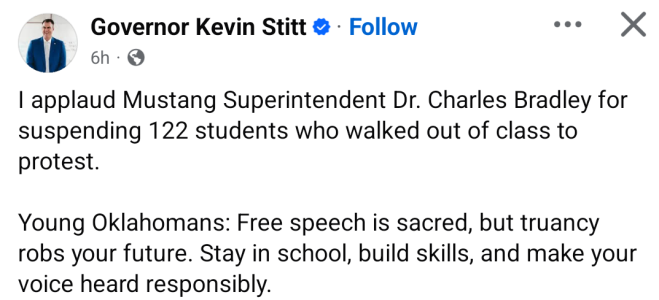
There are still limits on what students can do in public schools. Under the ruling, students can’t violate rules that aren’t targeted at expression — like attendance policies — as long as their school is applying the rules equally, regardless of whether students have broken them to protest or for other reasons. And students can’t “materially disrupt” the functioning of their school, though what’s considered disruptive can depend on the situation.

 
Tinker v. Des Moines is a historic Supreme Court ruling from 1969 that cemented students’ rights to free speech in public schools.

Mary Beth Tinker was a 13-year-old junior high school student in December 1965 when she and a group of students decided to wear black armbands to school to protest the war in Vietnam. The school board got wind of the protest and passed a preemptive ban. When Mary Beth arrived at school on Dec. 16, she was asked to remove the armband and was then suspended.

Four other students were suspended as well, including her brother John Tinker and Chris Eckhardt. The students were told they could not return to school until they agreed to remove their armbands. The students returned after the Christmas break without armbands, but in protest, they wore black clothing for the remainder of the school year — and filed a First Amendment lawsuit.

Represented by the ACLU, the students and their families embarked on a four-year court battle that culminated in the landmark Supreme Court decision. Dan Johnston, a young lawyer also from Des Moines and just out of law school, argued the case.

On Feb. 24, 1969, the court ruled 7-2 that students do not “shed their constitutional rights to freedom of speech or expression at the schoolhouse gate.”

The court found that the First Amendment applied to public schools, and school officials could not censor student speech unless it disrupted the educational process. Because wearing a black armband was not disruptive, the court held that the First Amendment protected the right of students to wear them.


The court’s majority opinion, written by Justice Abe Fortas, went on to affirm the freedom that young people have under the Constitution:

In our system, state-operated schools may not be enclaves of totalitarianism. School officials do not possess absolute authority over their students. Students… are possessed of fundamental rights which the State must respect, just as they themselves must respect their obligations to the State. In our system, students may not be regarded as closed-circuit recipients of only that which the State chooses to communicate. They may not be confined to the expression of those sentiments that are officially approved. In the absence of a specific showing of constitutionally valid reasons to regulate their speech, students are entitled to freedom of expression of their views.

There are still limits on what students can do in public schools. Under the ruling, students can’t violate rules that aren’t targeted at expression — like attendance policies — as long as their school is applying the rules equally, regardless of whether students have broken them to protest or for other reasons. And students can’t “materially disrupt” the functioning of their school, though what’s considered disruptive can depend on the situation.
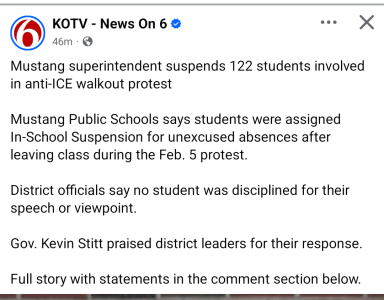
Yeah I keep thinking there's gotta be more to this story! All they can do is count them absent while protesting... I'm almost positive...
 
Yeah I keep thinking there's gotta be more to this story! All they can do is count them absent while protesting... I'm almost positive...
The high schools that I’ve worked with all have some level of discipline for unexcused absence. And leaving campus without prior approval has additional discipline. In-school suspension does seem reasonable for a first time offense leaving campus without permission.

I would assume any student that had their parent call first to excuse them from school would not receive any punishment…and their absence would be recorded as excused.
 
The high schools that I’ve worked with all have some level of discipline for unexcused absence. And leaving campus without prior approval has additional discipline. In-school suspension does seem reasonable for a first time offense leaving campus without permission.

I would assume any student that had their parent call first to excuse them from school would not receive any punishment…and their absence would be recorded as excused.
Several schools have taken part in ice protests lately…have not heard of anyone being disciplined for an unexcusd absence (no way they all had prior approval) IMO… whether you agree with the protest or not, I wouldn’t want to discourage young people for exercising their rights.
 
Several schools have taken part in ice protests lately…have not heard of anyone being disciplined for an unexcusd absence (no way they all had prior approval) IMO… whether you agree with the protest or not, I wouldn’t want to discourage young people for exercising their rights.
Students in two particular south Tulsa school districts did receive discipline for unexcused absence. And students excused by their parents did not. There just wasn’t a press release about it.

This doesn’t discourage exercising rights. I think it is understandable that school administrators have a duty to keep students on-campus (they have a “duty to supervise”). If students were allowed to leave campus without prior permission from parents that could open the district to liability.
 
Students in two particular south Tulsa school districts did receive discipline for unexcused absence. And students excused by their parents did not. There just wasn’t a press release about it.

This doesn’t discourage exercising rights. I think it is understandable that school administrators have a duty to keep students on-campus (they have a “duty to supervise”). If students were allowed to leave campus without prior permission from parents that could open the district to liability.

So what happens if the student wishes to protest but the parent says no?

Not questioning the decision of the schools in their duty to supervise, just wondering how all of this works for a student who is doing something they see as justifiable but maybe their parents see otherwise.
 
So what happens if the student wishes to protest but the parent says no?

Not questioning the decision of the schools in their duty to supervise, just wondering how all of this works for a student who is doing something they see as justifiable but maybe their parents see otherwise.
If they choose to protest against their parent's wishes and in violation of school policy without permission to leave campus they suffer the consequences both at school and at home. That's called life. They have the right to protest, but they don't have the right to be free from consequences.
 
So what happens if the student wishes to protest but the parent says no?

Not questioning the decision of the schools in their duty to supervise, just wondering how all of this works for a student who is doing something they see as justifiable but maybe their parents see otherwise.

Oklahoma has one of the strongest statutory frameworks in the U.S. affirming parental control.

The Oklahoma Parental Rights statute (Title 25 §2002) explicitly states that all parental rights are reserved to the parent of a minor child and cannot be interfered with by the state or other institutions. These include:

  • Right to direct upbringing
  • Right to direct education
  • Right to direct moral or religious training
    [law.justia.com]
This means a parent in Oklahoma legally may forbid a minor child from participating in a protest, whether for safety, moral, educational, or personal reasons.


Yes—Oklahoma protects the right to peaceably assemble under both state and U.S. constitutions. Protest rights are strongest in public forums such as streets, sidewalks, and parks. [news9.com]

BUT:
These constitutional rights do not override parental authority over a minor’s activities.
A minor may have the free‑speech right to protest, but cannot compel a parent to permit them to go.
 
So what happens if the student wishes to protest but the parent says no?

Not questioning the decision of the schools in their duty to supervise, just wondering how all of this works for a student who is doing something they see as justifiable but maybe their parents see otherwise.
Youth love getting out of schools. So for a school the size of 3,200 students with just 50-80 reported at protest by media…my first assumption is there were probably many instances of parents telling their child “no” (they cannot leave school to attend the protest).

My second assumption is it would not matter to school officials if parents told their students no or if the students left campus without asking their parents. Both are unexcused absences tied to increased discipline by leaving campus without permission.

The only problem I would see is if school officials did not allow students to leave once the school received parent permission. Or if the school retaliated and disciplined students who did receive parent permission. Both would be violation of free speech and/or parental rights.
 
Students in two particular south Tulsa school districts did receive discipline for unexcused absence. And students excused by their parents did not. There just wasn’t a press release about it.

This doesn’t discourage exercising rights. I think it is understandable that school administrators have a duty to keep students on-campus (they have a “duty to supervise”). If students were allowed to leave campus without prior permission from parents that could open the district to liability.
Me wonders if Mustang does the same thing for senior skip day? I know not all of them get checked out by parents....I imagine you don't know, just wondering out loud...
 
Back
Top